
Deutsch: Hafen von Kopenhagen / Español: Puerto de Copenhague / Português: Porto de Copenhaga / Français: Port de Copenhague / Italiano: Porto di Copenaghen
The Port of Copenhagen is one of Northern Europe's most strategically significant maritime hubs, serving as a critical node for trade, passenger transport, and logistics. Situated at the crossroads of the Baltic Sea and the North Sea, it plays a pivotal role in connecting Scandinavia with global markets. Its modern infrastructure and efficient operations make it a cornerstone of regional economic activity, while its historical roots underscore its enduring importance in maritime history.
General Description
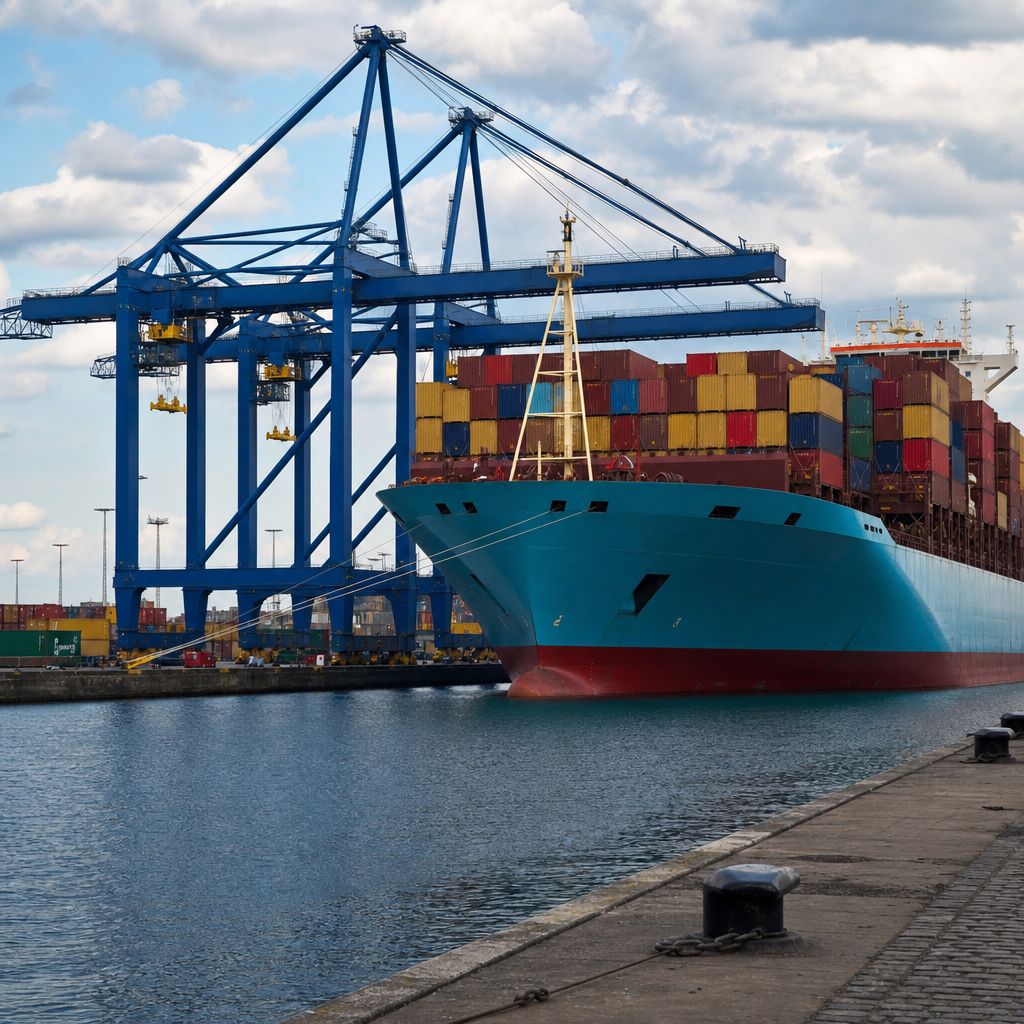
The Port of Copenhagen is Denmark's largest and most versatile port, encompassing multiple terminals that handle a diverse range of cargo types, including containers, bulk goods, liquid bulk, and roll-on/roll-off (RoRo) freight. Managed by the Copenhagen Malmö Port (CMP), a joint Danish-Swedish enterprise, the port operates across several locations, with the primary facilities situated in Copenhagen's inner harbor and the adjacent Nordhavn (North Harbor) area. Its geographical advantage—proximity to major shipping routes and direct access to the Øresund Strait—enhances its competitiveness as a transshipment hub for goods moving between Europe, Asia, and the Americas.
The port's infrastructure is designed to accommodate vessels of varying sizes, from small feeder ships to large container carriers with a draft of up to 15 meters. Advanced cargo-handling equipment, including gantry cranes, automated stacking systems, and specialized terminals for refrigerated goods, ensures high efficiency and minimal turnaround times. Additionally, the port's integration with rail and road networks facilitates seamless multimodal transport, reducing congestion and environmental impact. This connectivity is further bolstered by the Øresund Bridge, which links Denmark and Sweden, enabling swift overland distribution across Scandinavia.
Beyond its commercial functions, the Port of Copenhagen is a vital passenger gateway, serving as a major cruise destination and ferry terminal. The port's cruise facilities, such as the Langelinie Pier, accommodate some of the world's largest cruise ships, contributing significantly to Denmark's tourism sector. Meanwhile, ferry services to destinations like Oslo, Norway, and Bornholm, Denmark, provide essential transport links for both passengers and freight. The port's dual role as a cargo and passenger hub underscores its multifaceted contribution to the regional economy.
Sustainability is a cornerstone of the Port of Copenhagen's operations. The port authority has implemented ambitious environmental policies, including shore power facilities to reduce emissions from docked vessels, incentives for low-sulfur fuels, and investments in renewable energy sources. These initiatives align with Denmark's national climate goals and the European Union's Green Deal, positioning the port as a leader in sustainable maritime logistics. Furthermore, ongoing expansion projects, such as the development of the Nordhavn area, aim to future-proof the port's capacity while minimizing its ecological footprint.
Historical Development
The Port of Copenhagen's origins trace back to the 12th century, when the city emerged as a key trading post in the Hanseatic League, a medieval network of merchant guilds. Its natural harbor, sheltered by the island of Amager, provided an ideal location for early maritime trade, facilitating exchanges between Northern Europe and the Baltic region. By the 15th century, Copenhagen had established itself as a dominant naval and commercial center under the Danish monarchy, with the port serving as a base for both trade and military expeditions.
The 19th century marked a period of rapid industrialization and expansion for the port. The construction of new docks, warehouses, and rail connections transformed Copenhagen into a modern maritime hub, capable of handling the growing volumes of goods generated by the Industrial Revolution. The port's strategic importance was further cemented during World War II, when it served as a critical supply route for neutral Denmark, despite the challenges posed by wartime blockades.
In the latter half of the 20th century, the Port of Copenhagen underwent significant modernization to accommodate the rise of containerization. The introduction of standardized shipping containers in the 1960s revolutionized global trade, and the port adapted by developing dedicated container terminals equipped with specialized cranes and storage facilities. The 2001 merger with the Port of Malmö to form Copenhagen Malmö Port (CMP) marked a new era of cross-border collaboration, enhancing the port's capacity and competitiveness in the Baltic Sea region. Today, the port continues to evolve, with ongoing investments in digitalization, automation, and green technologies to meet the demands of 21st-century logistics.
Technical Infrastructure
The Port of Copenhagen's technical infrastructure is designed to handle a wide spectrum of maritime operations with precision and efficiency. The port's container terminals, such as the Copenhagen Container Terminal (CCT), are equipped with post-Panamax gantry cranes capable of lifting containers from vessels with a beam width of up to 50 meters. These cranes, combined with automated guided vehicles (AGVs) and rail-mounted stacking cranes, enable rapid loading and unloading, reducing vessel dwell times to as little as 12 hours for large container ships. The port's annual container throughput exceeds 1.5 million twenty-foot equivalent units (TEUs), a testament to its high capacity and operational efficiency.
For bulk cargo, the port features specialized terminals for dry bulk (e.g., grain, coal, and minerals) and liquid bulk (e.g., oil, chemicals, and liquefied natural gas). The bulk terminals are equipped with conveyor systems, silos, and tank farms, ensuring safe and efficient handling of sensitive materials. The port's RoRo terminals, which facilitate the transport of wheeled cargo such as trucks and trailers, are among the most advanced in Northern Europe, with direct access to the Øresund Bridge for swift overland distribution.
Passenger operations are equally sophisticated, with the port's cruise terminals offering state-of-the-art facilities for turnaround and transit calls. The Langelinie Pier, for instance, can accommodate vessels up to 360 meters in length and provides shore power connections to reduce emissions during port stays. Ferry terminals, such as the one serving the Oslo route, are designed for high-frequency operations, with dedicated ramps and customs facilities to expedite passenger and vehicle processing. The port's commitment to digitalization is evident in its use of advanced port community systems (PCS), which streamline communication between stakeholders, including shipping lines, customs authorities, and logistics providers.
Application Area
- Container Shipping: The Port of Copenhagen is a key hub for containerized trade, serving as a transshipment point for goods moving between Europe, Asia, and North America. Its deep-water terminals and efficient handling processes make it an attractive alternative to larger ports like Rotterdam or Hamburg, particularly for feeder services in the Baltic Sea region.
- Bulk and Breakbulk Cargo: The port handles a diverse range of bulk commodities, including agricultural products, energy resources, and industrial materials. Its specialized terminals ensure safe and efficient storage and transport, catering to industries such as food processing, manufacturing, and energy production.
- Passenger Transport: As a major cruise and ferry destination, the port plays a crucial role in regional mobility and tourism. Its cruise terminals welcome over 1 million passengers annually, while ferry services provide essential links to neighboring countries, supporting both leisure travel and freight transport.
- Logistics and Distribution: The port's integration with rail and road networks enables seamless multimodal transport, making it a critical node in supply chains across Scandinavia and beyond. Its proximity to Copenhagen's urban center also facilitates last-mile distribution for e-commerce and retail sectors.
- Energy and Industrial Supply: The port serves as a gateway for energy resources, including oil, gas, and renewable energy components. Its liquid bulk terminals support Denmark's energy sector, while its proximity to industrial zones ensures efficient supply chains for manufacturing and construction industries.
Well Known Examples
- Copenhagen Container Terminal (CCT): One of the port's flagship facilities, CCT is a modern container terminal equipped with post-Panamax cranes and automated stacking systems. It handles a significant portion of the port's container throughput and serves as a key transshipment hub for feeder vessels in the Baltic Sea.
- Langelinie Cruise Terminal: Located near the iconic Little Mermaid statue, this terminal is one of Northern Europe's busiest cruise ports, welcoming vessels from major cruise lines such as Royal Caribbean and MSC. It offers shore power connections and advanced passenger processing facilities.
- Nordhavn Development Project: A large-scale expansion initiative aimed at transforming the Nordhavn area into a sustainable urban and port district. The project includes new container terminals, logistics hubs, and residential zones, with a focus on reducing carbon emissions and enhancing multimodal connectivity.
- DFDS Oslo Ferry Route: One of the port's most important ferry connections, this route links Copenhagen with Oslo, Norway, providing daily passenger and freight services. The route is a vital transport link for both tourism and trade between Denmark and Norway.
- Copenhagen Malmö Port (CMP): The joint Danish-Swedish port authority that manages the Port of Copenhagen and the Port of Malmö. CMP's cross-border operations enhance the efficiency and capacity of both ports, making them a unified gateway for trade in the Øresund region.
Risks and Challenges
- Environmental Regulations: The Port of Copenhagen operates under stringent environmental regulations, including the International Maritime Organization's (IMO) sulfur emission limits and the European Union's Green Deal. Compliance with these regulations requires significant investments in green technologies, such as shore power and alternative fuels, which can increase operational costs.
- Competition from Other Ports: The port faces intense competition from larger European hubs like Rotterdam, Hamburg, and Antwerp, as well as emerging ports in the Baltic Sea region. To remain competitive, the Port of Copenhagen must continuously invest in infrastructure, digitalization, and sustainability initiatives.
- Climate Change and Rising Sea Levels: As a coastal facility, the port is vulnerable to the impacts of climate change, including rising sea levels and extreme weather events. Adaptation measures, such as reinforced docks and flood barriers, are essential to ensure the port's long-term resilience.
- Supply Chain Disruptions: Global events, such as the COVID-19 pandemic or geopolitical conflicts, can disrupt supply chains and reduce cargo volumes. The port must maintain flexibility and contingency plans to mitigate the impact of such disruptions on its operations.
- Urban Development Pressures: The Port of Copenhagen is situated in close proximity to the city's urban center, leading to potential conflicts between port expansion and residential or commercial development. Balancing these competing interests requires careful planning and stakeholder engagement.
- Cybersecurity Threats: As the port increasingly relies on digital systems for operations and communication, it becomes a potential target for cyberattacks. Robust cybersecurity measures are necessary to protect critical infrastructure and data from malicious actors.
Similar Terms
- Port of Rotterdam: The largest port in Europe and a major global hub for container and bulk cargo. Like the Port of Copenhagen, it serves as a critical node in international supply chains but operates on a significantly larger scale.
- Port of Hamburg: A key German port located on the Elbe River, specializing in container and bulk cargo. It shares similarities with the Port of Copenhagen in terms of its role as a transshipment hub for Northern Europe.
- Port of Gothenburg: Sweden's largest port and a direct competitor to the Port of Copenhagen in the Baltic Sea region. It is known for its advanced RoRo and container terminals, as well as its strong rail and road connections.
- Port of Antwerp: A major Belgian port and one of Europe's leading chemical and container hubs. While larger than the Port of Copenhagen, it faces similar challenges related to environmental regulations and competition.
- Port of Tallinn: An emerging port in Estonia that serves as a gateway to the Baltic States and Russia. It competes with the Port of Copenhagen for transshipment traffic in the Baltic Sea but operates on a smaller scale.
Summary
The Port of Copenhagen is a vital maritime hub that combines historical significance with modern efficiency, serving as a cornerstone of trade, logistics, and passenger transport in Northern Europe. Its strategic location, advanced infrastructure, and commitment to sustainability position it as a key player in global supply chains, while its dual role as a cargo and passenger port underscores its multifaceted economic impact. However, the port faces challenges such as environmental regulations, competition, and climate change, which require ongoing investment and innovation. By leveraging its strengths in digitalization, multimodal connectivity, and green technologies, the Port of Copenhagen is well-equipped to navigate these challenges and maintain its status as a leading maritime gateway in the years to come.
--
Sources: Copenhagen Malmö Port (CMP) Annual Reports, International Maritime Organization (IMO) Regulations, European Union Green Deal Documentation, Port Technology International.