
English: Heathrow Airport / Español: Aeropuerto de Heathrow / Português: Aeroporto de Heathrow / Français: Aéroport d'Heathrow / Italiano: Aeroporto di Heathrow
Heathrow Airport stands as one of the world's most significant aviation hubs, shaping global transport, logistics, and mobility networks. Located in West London, it serves as the primary international gateway to the United Kingdom, facilitating passenger travel, cargo shipments, and economic connectivity. Its strategic position and infrastructure make it a critical node in both commercial aviation and supply chain operations.
General Description
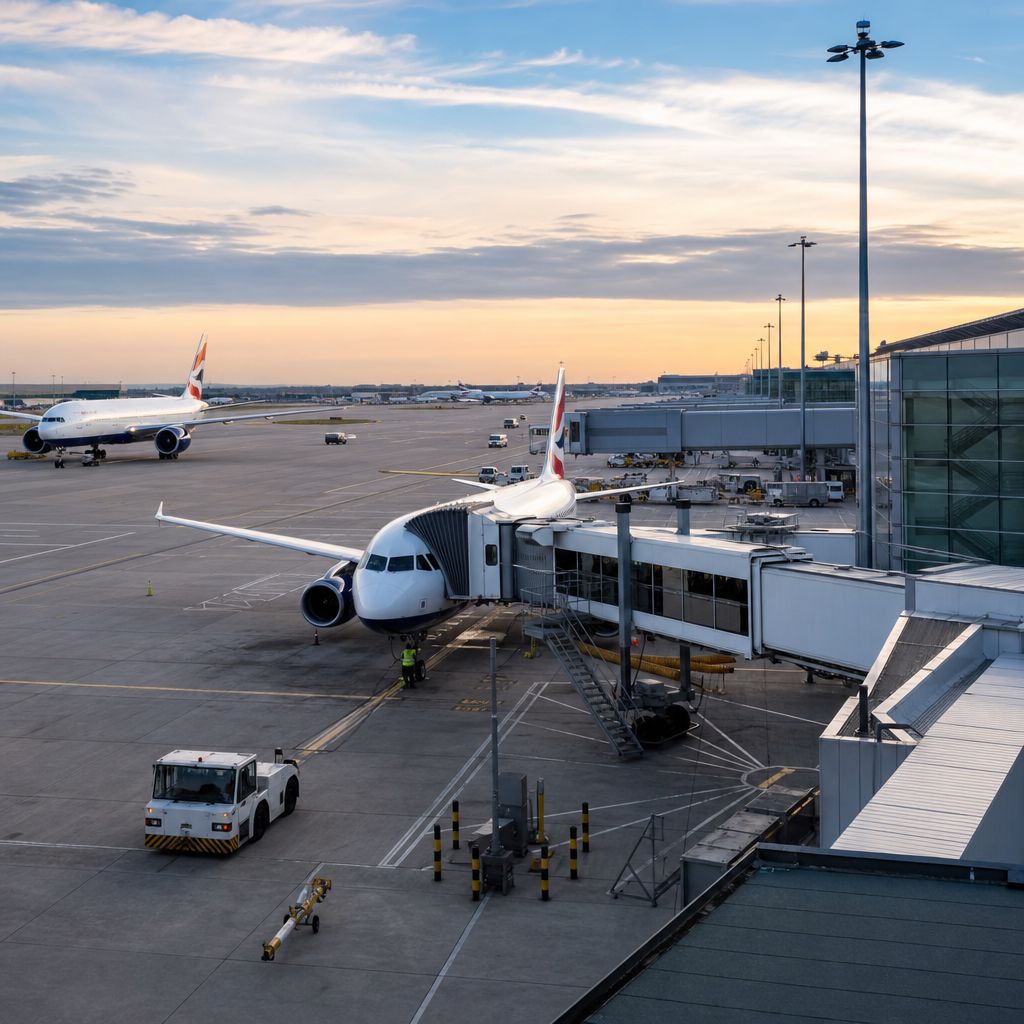
Heathrow Airport is the largest and busiest airport in the United Kingdom, handling millions of passengers and tonnes of cargo annually. It operates as a major hub for international flights, connecting over 180 destinations across more than 90 countries. The airport's infrastructure includes four operational terminals, extensive runway capacity, and advanced logistics facilities, enabling it to manage high volumes of air traffic efficiently.
The airport's role extends beyond passenger transport, as it serves as a vital link in global supply chains. Its cargo operations support industries ranging from pharmaceuticals to automotive manufacturing, ensuring timely deliveries of goods across continents. Heathrow's proximity to London and its integration with road, rail, and public transport networks further enhance its accessibility and economic impact.
Owned and operated by Heathrow Airport Holdings Limited, the airport has undergone continuous expansion and modernization to meet growing demand. Investments in technology, sustainability initiatives, and passenger experience improvements reflect its commitment to maintaining high standards in aviation. Despite challenges such as capacity constraints and environmental concerns, Heathrow remains a cornerstone of international air travel and logistics.
Historical Development
Heathrow Airport's origins trace back to the 1930s, when it was established as a small airfield known as Great West Aerodrome. Initially used for military purposes during World War II, it was later developed into a civilian airport in 1946. The first terminal, now Terminal 2, opened in 1955, marking the beginning of Heathrow's transformation into a major international hub.
Throughout the latter half of the 20th century, Heathrow expanded significantly, with the addition of Terminals 1, 3, and 4 to accommodate increasing passenger numbers. The construction of Terminal 5 in 2008 represented a major milestone, introducing state-of-the-art facilities and increasing the airport's capacity. Proposals for a third runway have been debated for decades, reflecting the ongoing need to address congestion and future growth.
Technical Infrastructure
Heathrow Airport's infrastructure is designed to support high-volume operations with efficiency and safety. It features two parallel runways, each approximately 3,900 metres in length, capable of handling large aircraft such as the Airbus A380. The airport's air traffic control system, managed by NATS (National Air Traffic Services), ensures smooth coordination of arrivals and departures, even during peak periods.
The terminals are equipped with advanced security systems, automated check-in kiosks, and biometric screening technologies to streamline passenger processing. Cargo facilities include temperature-controlled warehouses for perishable goods, secure storage for high-value items, and dedicated areas for hazardous materials, adhering to international regulations such as those set by the International Air Transport Association (IATA) and the International Civil Aviation Organization (ICAO).
Application Area
- Passenger Transport: Heathrow serves as a primary hub for both domestic and international travel, offering connections to major cities worldwide. Airlines such as British Airways and Virgin Atlantic operate extensive networks from the airport, catering to business and leisure travellers.
- Cargo Logistics: The airport plays a crucial role in global trade, handling over 1.2 million tonnes of cargo annually. It supports industries such as pharmaceuticals, electronics, and automotive manufacturing by providing fast and reliable air freight services.
- Economic Impact: Heathrow contributes significantly to the UK economy, generating employment and supporting businesses in sectors such as hospitality, retail, and transportation. It serves as a key driver of regional development in the London area.
- Sustainability Initiatives: The airport has implemented measures to reduce its environmental footprint, including carbon offset programmes, energy-efficient infrastructure, and noise reduction strategies. These efforts align with global aviation sustainability goals, such as those outlined in the Carbon Offsetting and Reduction Scheme for International Aviation (CORSIA).
Well Known Examples
- Terminal 5: Opened in 2008, Terminal 5 is one of Heathrow's most advanced facilities, designed to handle up to 30 million passengers annually. It features automated baggage systems, spacious lounges, and retail outlets, setting a benchmark for modern airport design.
- Heathrow Express: This dedicated rail service connects the airport to central London in approximately 15 minutes, providing a fast and convenient transport option for passengers. The service operates high-speed trains with frequent departures, enhancing connectivity.
- Cargo Operations: Heathrow's cargo facilities are among the most sophisticated in Europe, handling high-value shipments such as pharmaceuticals and luxury goods. The airport's proximity to major motorways and rail links ensures efficient distribution of goods across the UK and beyond.
- Sustainability Projects: Heathrow has introduced initiatives such as the use of sustainable aviation fuels (SAF) and electric ground vehicles to reduce emissions. These projects demonstrate the airport's commitment to environmental stewardship while maintaining operational efficiency.
Risks and Challenges
- Capacity Constraints: Heathrow operates at near-full capacity, leading to congestion and delays during peak periods. The proposed third runway aims to address this issue, but regulatory and environmental hurdles have delayed its implementation.
- Environmental Impact: Aviation is a significant contributor to carbon emissions, and Heathrow faces pressure to mitigate its environmental footprint. Balancing growth with sustainability remains a key challenge for the airport's long-term development.
- Security Threats: As a major international hub, Heathrow is a potential target for security threats, including terrorism and cyberattacks. The airport invests heavily in advanced security measures to safeguard passengers and infrastructure.
- Economic Dependence: Heathrow's operations are closely tied to global economic conditions. Downturns in travel demand, such as those caused by the COVID-19 pandemic, can have severe financial implications for the airport and its stakeholders.
- Regulatory Compliance: The airport must adhere to stringent international and national regulations governing aviation safety, security, and environmental standards. Non-compliance can result in penalties and reputational damage.
Similar Terms
- Gatwick Airport: Located south of London, Gatwick is the UK's second-busiest airport and serves as an alternative hub for international and domestic flights. It competes with Heathrow in passenger and cargo traffic but operates with a single runway.
- Charles de Gaulle Airport: Situated in Paris, France, this airport is one of Europe's largest aviation hubs, comparable to Heathrow in terms of passenger volume and cargo operations. It serves as a major connection point for flights between Europe and other continents.
- Dubai International Airport: As one of the world's busiest airports, Dubai International serves as a global transit hub, particularly for flights between Europe, Asia, and Africa. Its strategic location and modern infrastructure make it a key competitor to Heathrow in international aviation.
- Airport Hub: A term used to describe airports that serve as central transfer points for passengers and cargo, facilitating connections between multiple destinations. Heathrow is a prime example of an airport hub, enabling seamless travel across global networks.
Summary
Heathrow Airport is a cornerstone of global aviation, playing a pivotal role in passenger transport, cargo logistics, and economic connectivity. Its advanced infrastructure, strategic location, and commitment to innovation have established it as one of the world's leading airports. However, challenges such as capacity constraints, environmental concerns, and security risks require ongoing attention to ensure its continued success.
The airport's ability to adapt to evolving demands in transport and logistics will determine its future relevance in an increasingly competitive industry. By addressing these challenges through sustainable practices and technological advancements, Heathrow can maintain its position as a vital hub for international mobility and trade.
--