
Deutsch: Monaco Yacht Club Marina Monaco / Español: Marina del Yacht Club de Mónaco / Português: Marina do Yacht Club de Mônaco / Français: Marina du Yacht Club de Monaco / Italiano: Marina del Yacht Club di Monaco
The Monaco Yacht Club Marina Monaco represents a landmark in modern maritime infrastructure, combining luxury, functionality, and sustainability within the global yachting industry. Situated in the heart of the Mediterranean, this marina serves as a hub for superyachts, maritime events, and logistical operations, reflecting Monaco's long-standing tradition as a center for high-end maritime activities. Its strategic location and state-of-the-art facilities make it a key player in the intersection of transport, logistics, and mobility for the luxury yachting sector.
General Description
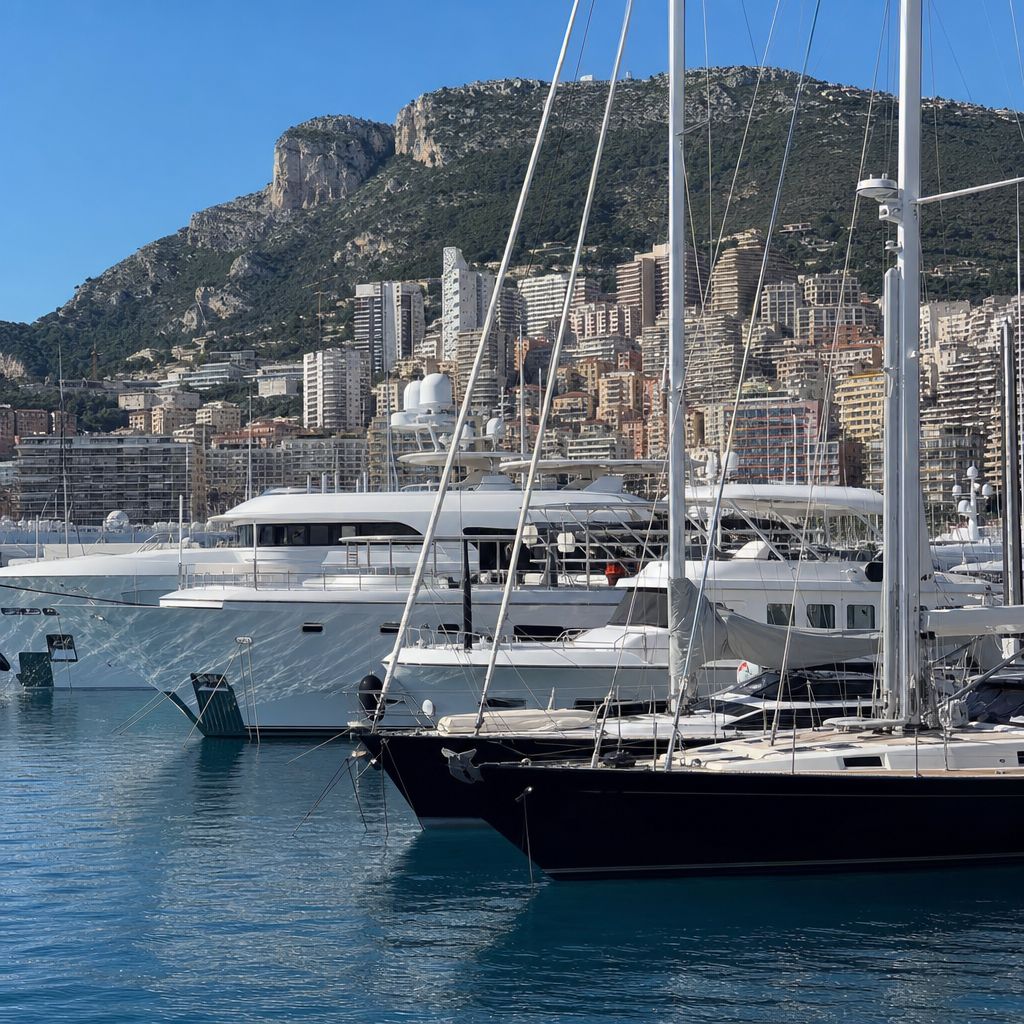
The Monaco Yacht Club Marina Monaco is an exclusive marina complex developed under the patronage of the Yacht Club de Monaco, an institution founded in 1953 by Prince Rainier III. The marina is designed to accommodate some of the world's largest and most prestigious superyachts, with berths capable of hosting vessels up to 180 meters in length. Its construction was part of a broader initiative to modernize Monaco's maritime infrastructure while preserving the principality's unique coastal environment. The project was completed in phases, with the final section inaugurated in 2022, expanding the marina's capacity to over 700 berths, including spaces for smaller vessels and tenders.
The marina's design prioritizes both aesthetic appeal and operational efficiency. Its floating docks are equipped with advanced utilities, including high-capacity shore power connections, freshwater supplies, and waste management systems compliant with the International Maritime Organization's (IMO) MARPOL regulations. These features ensure that superyachts can operate with minimal environmental impact while docked. Additionally, the marina incorporates smart technologies, such as real-time monitoring of water quality and energy consumption, to optimize resource use and reduce operational costs for yacht owners and operators.
The Monaco Yacht Club Marina Monaco is not merely a docking facility but a multifunctional maritime hub. It includes a dedicated yacht clubhouse, which serves as a social and administrative center for members, as well as commercial spaces that host maritime service providers, luxury boutiques, and gourmet restaurants. The marina's integration with Monaco's urban fabric allows for seamless connectivity to the principality's transport networks, including its heliport, road systems, and public transportation, further enhancing its role in global mobility.
From a logistical perspective, the marina is a critical node in the supply chain for superyachts. It provides access to a network of specialized service providers, including refit and repair companies, fuel suppliers, and provisioning services. The proximity to major Mediterranean ports, such as Marseille and Genoa, ensures that the marina can efficiently coordinate the movement of goods and personnel, supporting the operational needs of yachts that traverse international waters. This logistical ecosystem is essential for maintaining the high standards of service expected in the luxury yachting industry.
Technical Specifications and Infrastructure
The Monaco Yacht Club Marina Monaco is engineered to meet the demanding requirements of superyachts, which often exceed 100 meters in length and require deep-water berths. The marina's floating docks are constructed from high-durability materials, such as reinforced concrete and marine-grade aluminum, designed to withstand the corrosive effects of saltwater and the mechanical stresses imposed by large vessels. The docks are anchored using a combination of pilings and mooring systems, ensuring stability even in adverse weather conditions, such as the strong winds and currents characteristic of the Mediterranean.
The marina's water depth ranges from 6 to 12 meters, accommodating vessels with drafts up to 8 meters. This depth is maintained through regular dredging operations, which are conducted in accordance with environmental regulations to minimize disruption to marine ecosystems. The marina also features a breakwater system, constructed from rock and concrete, to protect docked vessels from wave action and ensure safe navigation within the harbor. The breakwater's design incorporates ecological considerations, such as artificial reefs, to promote biodiversity and mitigate the environmental impact of the structure.
Energy efficiency is a cornerstone of the marina's infrastructure. The shore power systems provide yachts with access to electricity generated from renewable sources, reducing the need for onboard generators and lowering greenhouse gas emissions. According to the International Council of Marine Industry Associations (ICOMIA), shore power can reduce a yacht's carbon footprint by up to 30% while docked. The marina also incorporates a desalination plant to supply freshwater, further reducing the environmental strain associated with traditional water sourcing methods. Wastewater treatment facilities ensure that all effluents are processed to meet or exceed the standards set by the IMO's MEPC (Marine Environment Protection Committee).
Historical Development and Economic Impact
The development of the Monaco Yacht Club Marina Monaco is deeply intertwined with the principality's economic and cultural history. Monaco has long been a destination for the global elite, and its maritime heritage dates back to the late 19th century, when the first yacht clubs were established in the region. The Yacht Club de Monaco, founded in 1953, played a pivotal role in positioning Monaco as a premier destination for yachting enthusiasts. The marina's expansion in the 21st century was driven by the growing demand for high-end maritime facilities, as the number of superyachts worldwide increased by over 40% between 2010 and 2020, according to the Superyacht Group.
The economic impact of the marina on Monaco's economy is substantial. The principality's maritime sector contributes approximately 15% to its gross domestic product (GDP), with the marina serving as a catalyst for tourism, real estate development, and job creation. The presence of superyachts generates significant revenue through docking fees, which can exceed 10,000 euros per day for the largest vessels, as well as through ancillary services such as refueling, provisioning, and maintenance. The marina also attracts high-net-worth individuals, who often invest in Monaco's luxury real estate market, further stimulating economic growth.
The marina's role in hosting international events has further elevated its global profile. The Yacht Club de Monaco organizes annual regattas, such as the Monaco Classic Week and the Monaco Energy Boat Challenge, which attract participants and spectators from around the world. These events not only showcase Monaco's maritime expertise but also foster innovation in sustainable yachting technologies. The marina's infrastructure has been designed to support such events, with facilities for race management, spectator viewing, and media coverage.
Application Area
- Luxury Yachting and Tourism: The Monaco Yacht Club Marina Monaco is primarily a docking and service hub for superyachts, catering to the needs of ultra-high-net-worth individuals and charter companies. It provides a gateway to Monaco's luxury tourism sector, offering access to high-end accommodations, fine dining, and cultural attractions. The marina's proximity to the Monte Carlo Casino, the Prince's Palace, and the Formula 1 Grand Prix circuit makes it an ideal base for visitors seeking a blend of maritime and urban experiences.
- Maritime Logistics and Supply Chain: The marina serves as a logistical center for the provisioning and maintenance of superyachts. It hosts a network of service providers, including fuel suppliers, ship chandlers, and technical support teams, who ensure that yachts are fully equipped for extended voyages. The marina's strategic location in the Mediterranean facilitates the efficient movement of goods and personnel, reducing downtime for yacht operators and enhancing the overall efficiency of maritime logistics.
- Sustainable Maritime Innovation: The marina is a testing ground for sustainable technologies in the yachting industry. It supports initiatives such as the use of alternative fuels, hybrid propulsion systems, and energy-efficient shore power solutions. The Yacht Club de Monaco's commitment to sustainability is reflected in its collaboration with organizations like the IMO and the European Maritime Safety Agency (EMSA) to promote best practices in environmental stewardship.
- Event Management and Hospitality: The marina's infrastructure is designed to host large-scale maritime events, including regattas, boat shows, and corporate gatherings. Its facilities include conference rooms, exhibition spaces, and hospitality suites, which are utilized by event organizers to create immersive experiences for participants and attendees. The marina's integration with Monaco's hospitality sector ensures that events are supported by world-class services, from catering to security.
Well Known Examples
- Monaco Energy Boat Challenge: An annual event organized by the Yacht Club de Monaco, the Monaco Energy Boat Challenge showcases innovative solutions for sustainable yachting. The competition brings together teams from universities and private companies to present prototypes of energy-efficient boats, including those powered by hydrogen, solar, and electric propulsion systems. The event highlights the marina's role as a hub for maritime innovation and sustainability.
- Monaco Yacht Show: One of the most prestigious events in the yachting calendar, the Monaco Yacht Show attracts over 30,000 visitors annually, including yacht owners, brokers, and industry professionals. The event features the latest superyachts, maritime technologies, and luxury products, with the Monaco Yacht Club Marina Monaco serving as a central venue for exhibitions and networking. The show generates significant economic activity for Monaco and reinforces its reputation as the capital of the yachting world.
- Historic Grand Prix de Monaco: While primarily an automotive event, the Monaco Grand Prix has strong ties to the maritime sector, with many attendees arriving by yacht. The marina provides docking facilities for spectators and VIP guests, offering a unique vantage point for viewing the race. The event underscores the marina's role in Monaco's broader mobility ecosystem, connecting maritime and automotive transport.
Risks and Challenges
- Environmental Impact and Sustainability: Despite its commitment to sustainability, the Monaco Yacht Club Marina Monaco faces challenges related to the environmental footprint of superyachts. These vessels are significant consumers of energy and resources, and their operations can contribute to pollution, including greenhouse gas emissions and wastewater discharge. The marina must continuously invest in technologies and practices to mitigate these impacts, such as expanding shore power capacity and promoting the use of alternative fuels. Compliance with evolving international regulations, such as the IMO's 2030 and 2050 emissions targets, will require ongoing adaptation and innovation.
- Space Constraints and Urban Integration: Monaco's limited land area presents challenges for the expansion and integration of maritime infrastructure. The marina must balance the needs of yacht owners with those of the local community, including residents and businesses. Urban planning efforts must ensure that the marina's development does not encroach on public spaces or disrupt the principality's aesthetic and cultural heritage. Additionally, the marina's proximity to residential areas can lead to conflicts over noise, traffic, and access to waterfront areas.
- Security and Safety: The presence of high-value yachts and VIP guests makes the marina a potential target for security threats, including theft, vandalism, and terrorism. The marina must maintain robust security protocols, including surveillance systems, access controls, and coordination with local law enforcement agencies. Safety is also a concern, particularly during large-scale events, where the risk of accidents or emergencies increases. The marina's infrastructure must be designed to facilitate rapid response and evacuation procedures.
- Economic Dependence on the Yachting Industry: Monaco's economy is heavily reliant on the yachting sector, which exposes it to risks associated with global economic fluctuations. A downturn in the luxury yachting market, such as that experienced during the 2008 financial crisis or the COVID-19 pandemic, can have significant repercussions for the principality's revenue and employment. Diversifying the marina's offerings to include non-yachting activities, such as corporate events and cultural exhibitions, can help mitigate this risk.
- Regulatory Compliance: The marina operates within a complex regulatory framework that includes international maritime laws, European Union directives, and local Monegasque regulations. Compliance with these requirements can be challenging, particularly as regulations evolve to address emerging issues such as cybersecurity, data privacy, and environmental protection. The marina must invest in legal and technical expertise to ensure that its operations remain compliant and avoid potential fines or reputational damage.
Similar Terms
- Port Hercules: Port Hercules is Monaco's primary commercial and cruise ship port, located adjacent to the Monaco Yacht Club Marina Monaco. While both facilities serve maritime purposes, Port Hercules is focused on larger commercial vessels, including cruise ships and ferries, whereas the marina is dedicated to superyachts and luxury maritime activities. Port Hercules also plays a key role in Monaco's transport and logistics network, providing passenger and cargo services.
- One°15 Marina Sentosa Cove: Located in Singapore, One°15 Marina Sentosa Cove is a luxury marina that shares similarities with the Monaco Yacht Club Marina Monaco in terms of its focus on high-end yachting and sustainability. The marina offers berths for superyachts, as well as facilities for refit and repair services. It is also a venue for maritime events and serves as a gateway to Singapore's luxury tourism sector. However, One°15 Marina operates in a tropical climate, which presents different environmental and operational challenges compared to the Mediterranean setting of Monaco.
- Palma de Mallorca Marina: Situated in the Balearic Islands, the Palma de Mallorca Marina is one of the largest and most advanced marinas in the Mediterranean. It accommodates a wide range of vessels, from superyachts to sailing boats, and offers comprehensive services, including refueling, maintenance, and provisioning. Like the Monaco Yacht Club Marina Monaco, it is a key logistical hub for the yachting industry, but it serves a broader market that includes both luxury and recreational boating.
Summary
The Monaco Yacht Club Marina Monaco is a cornerstone of the global luxury yachting industry, offering a blend of cutting-edge infrastructure, sustainability, and logistical efficiency. As a hub for superyachts, maritime events, and high-end tourism, it plays a pivotal role in Monaco's economy and cultural identity. The marina's advanced technical specifications, including deep-water berths, shore power systems, and waste management facilities, set a benchmark for modern maritime infrastructure. However, it also faces challenges related to environmental sustainability, space constraints, and regulatory compliance, which require ongoing innovation and adaptation.
Beyond its operational functions, the marina serves as a platform for promoting sustainable practices in the yachting industry, hosting events such as the Monaco Energy Boat Challenge that drive innovation in alternative propulsion and energy efficiency. Its integration with Monaco's urban and transport networks further enhances its role in global mobility, connecting maritime, automotive, and aviation sectors. As the yachting industry continues to evolve, the Monaco Yacht Club Marina Monaco is poised to remain a leader in luxury maritime logistics and a model for sustainable marina development worldwide.
--