
English: London Underground Step-Free Access / Español: Acceso sin escalones en el Metro de Londres / Português: Acesso sem degraus no Metrô de Londres / Français: Accès sans marches dans le métro de Londres / Italiano: Accesso senza barriere nel metrò di Londra
The London Underground Step-Free Access initiative represents a critical advancement in urban mobility, addressing the long-standing barriers faced by passengers with reduced mobility. As one of the world's oldest and most extensive metro systems, the London Underground has historically presented challenges for individuals who rely on wheelchairs, pushchairs, or those with temporary injuries. This program aims to transform the network into a more inclusive and accessible public transport system, aligning with modern standards of universal design and regulatory requirements.
General Description
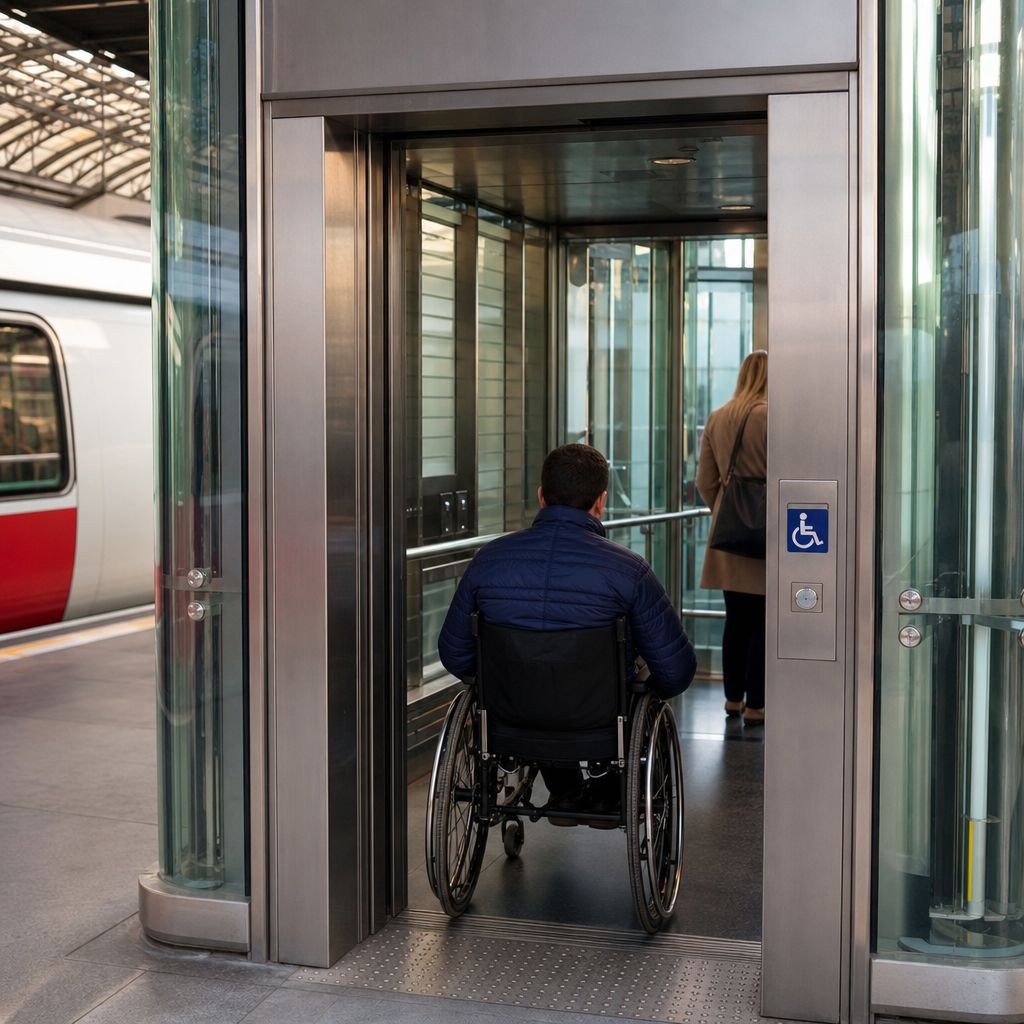
The London Underground, commonly referred to as the Tube, serves as the backbone of public transport in Greater London, with over 1.3 billion passenger journeys recorded annually (Transport for London, 2023). However, its infrastructure, much of which dates back to the 19th century, was not originally designed to accommodate passengers with disabilities. Step-free access refers to the provision of routes within stations that eliminate the need for stairs or escalators, thereby enabling seamless movement for all users. This includes the installation of lifts, ramps, tactile paving, and level boarding between platforms and trains.
The implementation of step-free access is not merely a technical upgrade but a societal imperative. In the United Kingdom, the Equality Act 2010 mandates that service providers, including transport operators, make reasonable adjustments to ensure accessibility for disabled individuals. The London Underground has faced criticism in the past for its slow progress in this area, with only a fraction of its 272 stations offering full step-free access as of the early 2020s. The initiative is part of Transport for London's (TfL) broader "Accessible Network" strategy, which seeks to improve accessibility across all modes of public transport, including buses, trams, and the Overground network.
The challenges of retrofitting step-free access into the London Underground are multifaceted. Many stations are located deep underground, with narrow platforms and limited space for structural modifications. Additionally, the heritage status of some stations restricts the extent of alterations that can be made. Despite these obstacles, TfL has committed to increasing the number of step-free stations through a combination of infrastructure upgrades, technological innovations, and operational changes. The goal is to ensure that all passengers, regardless of their physical abilities, can travel independently and with dignity.
Technical Implementation
The technical aspects of implementing step-free access in the London Underground involve a range of engineering and design solutions. Lifts are the most common method for providing vertical circulation, particularly in deep-level tube stations where platforms are often situated far below street level. Modern lifts are equipped with features such as braille buttons, audio announcements, and emergency communication systems to assist passengers with visual or hearing impairments. The installation of lifts requires careful planning to integrate them into existing station layouts without disrupting passenger flow or compromising structural integrity.
Ramps are another critical component, particularly in stations where lifts are not feasible due to spatial constraints. Portable ramps are often used as a temporary solution, but permanent ramps are preferred for long-term accessibility. These ramps must comply with specific gradients to ensure they are usable for wheelchair users, typically not exceeding a slope of 1:12 (8.33%) as per international accessibility standards (ISO 21542:2011). In some cases, platform humps or raised sections are installed to reduce the gap between the train and the platform, minimizing the risk of accidents for passengers with mobility impairments.
Tactile paving is an essential safety feature, providing tactile cues to visually impaired passengers. These textured surfaces, often in the form of blister paving or corduroy paving, are installed at platform edges, staircases, and lift entrances to alert users to potential hazards. Additionally, wayfinding systems, including signage with high-contrast colors and large fonts, are implemented to assist passengers with cognitive or visual disabilities in navigating the station environment.
Historical Development
The push for step-free access in the London Underground has evolved significantly over the past few decades. Prior to the 1990s, accessibility was not a priority in the design or operation of the Tube network. The first major shift occurred with the introduction of the Disability Discrimination Act 1995, which laid the groundwork for future accessibility legislation. However, progress remained slow due to the complexity of retrofitting historic infrastructure and the lack of dedicated funding.
A turning point came in the early 2000s, when TfL launched its "Step-Free Tube Access" program, initially targeting key stations such as Westminster, Green Park, and Canary Wharf. These early projects demonstrated the feasibility of accessibility upgrades, even in challenging environments. The 2012 London Olympics further accelerated progress, as the city sought to showcase its commitment to inclusive transport for international visitors. By 2016, TfL had achieved step-free access at 71 stations, a significant milestone but still only a quarter of the network.
In recent years, TfL has adopted a more ambitious approach, with a target of making 40% of stations step-free by 2024. This includes major projects such as the Bank Station upgrade, which involved the construction of a new lift shaft and step-free routes to all platforms. The COVID-19 pandemic temporarily disrupted progress, but TfL has since resumed its efforts, with a renewed focus on stations serving hospitals, schools, and residential areas with high populations of elderly or disabled individuals.
Application Area
- Urban Mobility: Step-free access is a cornerstone of inclusive urban mobility, enabling individuals with disabilities to participate fully in social, economic, and cultural activities. By removing physical barriers, the London Underground becomes a viable transport option for a broader segment of the population, reducing reliance on private vehicles or specialized transport services.
- Tourism and Hospitality: London is one of the world's most visited cities, attracting over 30 million tourists annually (Office for National Statistics, 2023). Step-free access enhances the visitor experience, allowing tourists with mobility impairments to explore the city's attractions without encountering insurmountable obstacles. This is particularly important for major hubs such as King's Cross St. Pancras and Victoria, which serve as gateways to the city.
- Employment and Education: Accessible transport is a key enabler of employment and education opportunities. Many workplaces and educational institutions in London are located near Tube stations, and step-free access ensures that individuals with disabilities can commute independently. This is critical for fostering diversity and inclusion in the workforce and academic settings.
- Emergency Evacuation: Step-free access also plays a vital role in emergency preparedness. In the event of an evacuation, passengers with mobility impairments must be able to exit stations quickly and safely. Lifts and ramps provide essential escape routes, reducing the risk of injury or entrapment during emergencies.
Well Known Examples
- Bank Station: One of the most complex step-free access projects in the London Underground's history, the Bank Station upgrade involved the construction of a new lift shaft and step-free routes to all platforms. The project, completed in 2022, required extensive engineering work to integrate lifts into the station's historic infrastructure while minimizing disruption to passenger services.
- King's Cross St. Pancras: As one of London's busiest transport hubs, King's Cross St. Pancras serves millions of passengers annually. The station underwent a major accessibility upgrade in the 2010s, including the installation of lifts, tactile paving, and level boarding platforms. These improvements have made it one of the most accessible stations in the network.
- Green Park Station: Green Park was one of the first deep-level Tube stations to achieve step-free access, with lifts installed in the early 2000s. The project demonstrated that accessibility upgrades were possible even in stations with limited space, setting a precedent for future developments.
- Tottenham Court Road Station: The station's step-free access project, completed in 2017, included the installation of lifts, ramps, and a new entrance to improve accessibility. The upgrades were part of a broader regeneration effort in the area, highlighting the link between accessibility and urban development.
Risks and Challenges
- Engineering Complexity: Retrofitting step-free access into historic stations often involves navigating complex engineering challenges, such as limited space, structural constraints, and the need to preserve heritage features. These factors can increase project costs and timelines, as well as the risk of unforeseen complications during construction.
- Funding Constraints: Accessibility upgrades require significant investment, and funding shortages have historically slowed progress. While TfL has secured government and private sector funding for some projects, the scale of the task means that many stations remain inaccessible. The economic impact of the COVID-19 pandemic has further strained budgets, leading to delays in planned upgrades.
- Passenger Disruption: Construction work to install lifts or ramps can cause significant disruption to passenger services, leading to delays, overcrowding, and inconvenience. TfL must carefully manage these disruptions to minimize the impact on daily commuters while ensuring that projects are completed efficiently.
- Operational Reliability: Lifts and other accessibility features must be maintained to a high standard to ensure they remain operational. Mechanical failures or maintenance issues can leave passengers stranded, particularly in deep-level stations where alternative routes may not be available. TfL has implemented redundancy measures, such as backup power supplies, to mitigate these risks.
- Public Awareness: Even with step-free access in place, some passengers may be unaware of its availability or how to use it. Effective communication, including clear signage and staff training, is essential to ensure that all passengers can benefit from the upgrades. TfL has introduced accessibility maps and journey planners to help passengers identify step-free routes.
Similar Terms
- Universal Design: A design approach that aims to create environments, products, and services that are accessible to all people, regardless of age, disability, or other factors. Universal design principles are increasingly being applied to public transport systems to ensure inclusivity.
- Barrier-Free Access: A broader term referring to the removal of physical, sensory, or cognitive barriers that prevent individuals from accessing spaces or services. In transport, this includes step-free access, as well as features such as audio announcements and tactile paving.
- Inclusive Mobility: A concept that emphasizes the need for transport systems to cater to the diverse needs of all passengers, including those with disabilities, elderly individuals, and families with young children. Inclusive mobility strategies often involve a combination of infrastructure upgrades, policy changes, and public engagement.
Summary
The London Underground Step-Free Access initiative is a transformative effort to create a more inclusive and accessible public transport system. By addressing the physical barriers that have historically excluded passengers with disabilities, the program aligns with legal requirements, societal expectations, and the principles of universal design. While significant progress has been made, challenges such as engineering complexity, funding constraints, and operational reliability remain. The success of this initiative will depend on continued investment, innovation, and collaboration between transport authorities, policymakers, and the community. Ultimately, step-free access is not just about infrastructure—it is about ensuring that every passenger can travel with independence, dignity, and ease.
--