
Deutsch: Radschnellwege in London, UK / Español: Autopistas para bicicletas en Londres, Reino Unido / Português: Ciclovias de alta velocidade em Londres, Reino Unido / Français: Autoroutes cyclables à Londres, Royaume-Uni / Italiano: Superstrade ciclabili a Londra, Regno Unito
The Cycling Highways in London, UK represent a transformative approach to urban mobility, designed to enhance cycling infrastructure in one of the world's most congested cities. These dedicated routes aim to provide safe, efficient, and direct pathways for cyclists, reducing reliance on motorized transport and promoting sustainable commuting. By integrating high-capacity cycling corridors into London's transport network, the initiative addresses both environmental concerns and the growing demand for active travel options.
General Description
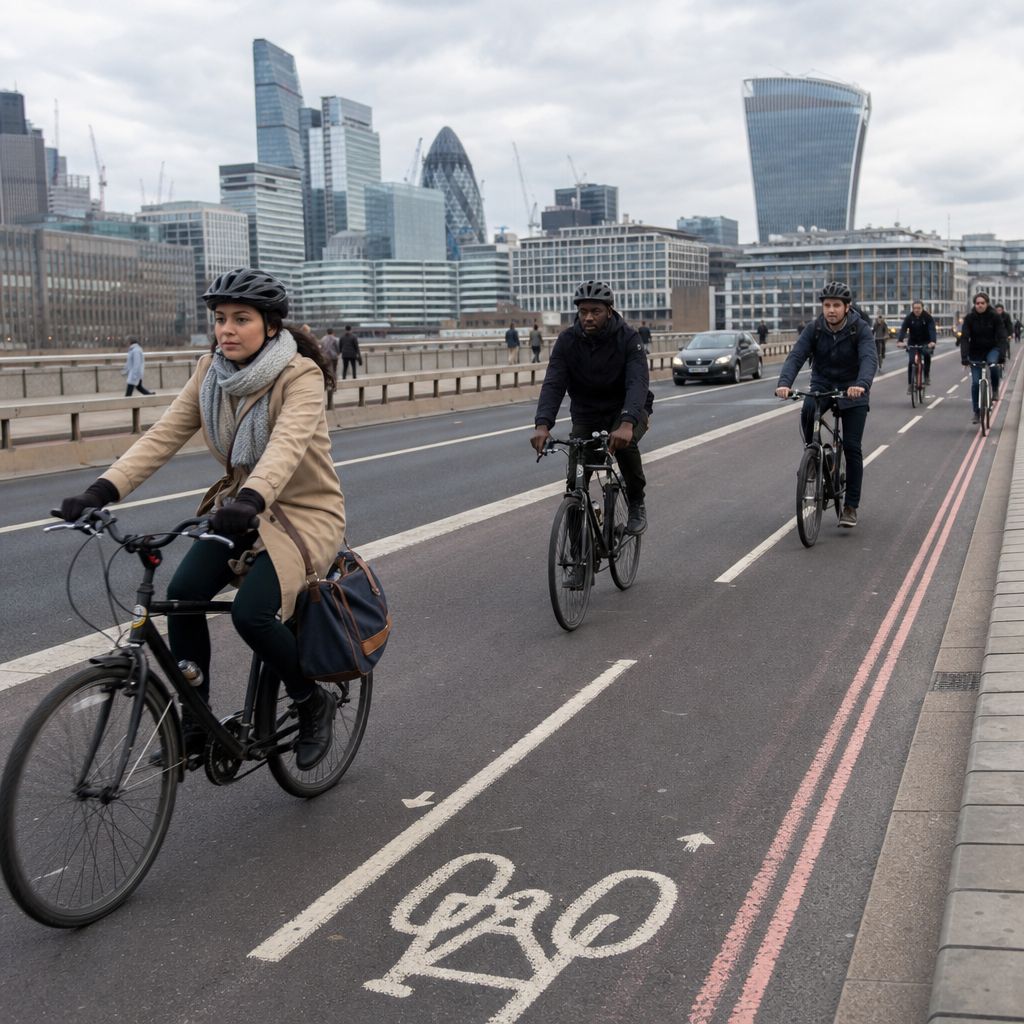
Cycling Highways in London are a network of high-quality, segregated cycle routes that prioritize speed, safety, and connectivity for cyclists. Unlike traditional bike lanes, which often share space with pedestrians or vehicles, these highways are engineered to accommodate high volumes of cyclists with minimal interruptions. They typically feature wide lanes, smooth surfaces, and clear signage to ensure a seamless experience for users. The design principles emphasize directness, reducing detours and delays that discourage cycling as a viable transport mode.
The development of these highways is part of London's broader strategy to reduce carbon emissions and alleviate traffic congestion. By providing a reliable alternative to cars and public transport, the routes encourage more people to adopt cycling for daily commutes, leisure, and even freight delivery. The infrastructure is built to cater to cyclists of all skill levels, from beginners to experienced riders, fostering inclusivity in urban mobility. Additionally, the highways are integrated with existing transport hubs, such as train stations and bus stops, to facilitate multimodal journeys.
The implementation of Cycling Highways has required significant investment in urban planning and engineering. Routes are often constructed along major arterial roads, repurposing underutilized spaces or reallocating lanes previously dominated by motor vehicles. This shift reflects a growing recognition of cycling as a critical component of modern urban transport systems. The highways also incorporate advanced safety features, such as protected intersections, priority signaling for cyclists, and real-time monitoring to address potential hazards.
London's approach to Cycling Highways serves as a model for other cities grappling with similar challenges. The initiative demonstrates how targeted infrastructure investments can reshape urban mobility, reduce pollution, and improve public health. However, the success of these highways depends on ongoing maintenance, public engagement, and adaptive planning to meet evolving demands. As cycling continues to gain popularity, the network is expected to expand, further embedding itself into the city's transport fabric.
Technical Specifications
Cycling Highways in London adhere to rigorous technical standards to ensure functionality and safety. The lanes are typically at least 3 meters wide, allowing for overtaking and accommodating cargo bikes or cyclists with trailers. Surfaces are constructed from durable materials, such as asphalt or concrete, to minimize wear and provide a smooth ride. Gradients are carefully managed to avoid steep inclines, ensuring accessibility for all users, including those with limited physical capacity.
Segregation from motorized traffic is a defining feature of these highways. Physical barriers, such as bollards, planters, or raised curbs, are used to separate cyclists from vehicles, reducing the risk of collisions. In areas where space is limited, innovative solutions like "floating" bike lanes—elevated above road level—are employed. Lighting and signage are designed to enhance visibility, particularly during low-light conditions, with reflective markings and LED indicators guiding cyclists along the route.
The highways are also equipped with smart technology to improve efficiency. Traffic signals at intersections are synchronized to prioritize cyclists, reducing wait times and improving flow. Some routes incorporate sensors to monitor usage patterns, providing data for future upgrades. Additionally, emergency call points and CCTV cameras are installed at regular intervals to enhance security and enable rapid response to incidents.
Historical Development
The concept of Cycling Highways in London emerged in response to the city's escalating traffic congestion and air quality crisis. The initial push for dedicated cycling infrastructure gained momentum in the early 2000s, driven by advocacy groups and a growing recognition of cycling's benefits. The first major milestone was the launch of the "Cycle Superhighways" program in 2008, which introduced a series of blue-painted lanes along key commuter routes. However, these early iterations were criticized for their lack of segregation and safety concerns.
In 2013, the Vision Zero initiative, aimed at eliminating traffic fatalities, prompted a redesign of the Cycle Superhighways. The new standards emphasized physical separation from motor vehicles and improved connectivity. The first upgraded route, CS3 (Cycle Superhighway 3), opened in 2016, setting a benchmark for subsequent projects. The success of CS3 demonstrated the potential of high-quality cycling infrastructure to attract new riders and reduce accidents.
The expansion of the network accelerated under the leadership of Transport for London (TfL) and the city's mayor. By 2020, several major routes, including CS2, CS6, and CS7, had been upgraded to meet the new standards. The introduction of the "Safer Streets" program further enhanced safety by redesigning junctions and introducing protected intersections. Today, the Cycling Highways network spans over 150 kilometers, with plans to extend it to 450 kilometers by 2030 as part of London's "Streetspace" plan.
Application Area
- Commuter Routes: Cycling Highways provide direct, high-capacity pathways for daily commuters, connecting residential areas with business districts. These routes reduce travel time and offer a reliable alternative to congested roads and crowded public transport, particularly during peak hours.
- Freight and Logistics: The highways facilitate the use of cargo bikes for last-mile deliveries, supporting businesses in reducing their carbon footprint. Companies in sectors such as retail, food delivery, and courier services increasingly rely on these routes to optimize logistics operations.
- Recreational Cycling: Beyond commuting, the highways serve recreational cyclists, offering scenic and safe routes for leisure rides. The integration with parks and green spaces enhances the appeal of cycling as a healthy and enjoyable activity.
- Tourism: The network supports cycling tourism by providing accessible routes to major landmarks and attractions. Tourists can explore the city efficiently while avoiding traffic, contributing to a more sustainable tourism model.
- Public Health: By promoting active travel, the highways contribute to public health initiatives aimed at reducing sedentary lifestyles. Regular cycling is associated with lower risks of cardiovascular diseases, obesity, and mental health issues, aligning with London's health and well-being goals.
Well Known Examples
- Cycle Superhighway 3 (CS3): One of the most prominent routes, CS3 runs from Barking to Tower Hill, covering approximately 17 kilometers. It features fully segregated lanes, priority signaling, and direct connections to key transport hubs, making it a vital artery for east-west commuters.
- Cycle Superhighway 6 (CS6): This route connects Elephant & Castle to King's Cross, spanning 8 kilometers. It is notable for its integration with major railway stations and its role in linking central London with southern residential areas. The route includes innovative features such as floating bike lanes and protected intersections.
- Quietway 1 (Q1): Part of the broader cycling network, Q1 offers a more relaxed alternative to the Superhighways, running from Waterloo to Greenwich. It prioritizes low-traffic streets and scenic routes, catering to cyclists who prefer a less intensive riding experience.
- East-West Cycle Superhighway (CSH): This ambitious project, completed in 2019, stretches from Paddington to Acton, providing a critical link across central London. It includes a 3-kilometer tunnel under Hyde Park, showcasing the scale and complexity of modern cycling infrastructure.
Risks and Challenges
- Safety Concerns: Despite segregation, conflicts with motor vehicles, particularly at intersections, remain a challenge. Poorly designed junctions or inadequate enforcement of traffic rules can lead to accidents, undermining confidence in the network.
- Space Constraints: London's dense urban environment limits the availability of space for cycling infrastructure. Retrofitting existing roads often requires trade-offs with pedestrian areas, parking, or motor vehicle lanes, leading to public resistance and political challenges.
- Maintenance and Upkeep: The highways require regular maintenance to address wear and tear, such as potholes or damaged barriers. Budget constraints and competing priorities can result in delays, reducing the quality of the cycling experience.
- Public Perception: Some segments of the population view cycling infrastructure as a disruption to established transport norms. Opposition from motorists, businesses, or residents can slow down or alter the implementation of new routes.
- Integration with Other Modes: While the highways are designed to connect with public transport, gaps in integration can limit their effectiveness. For example, inadequate bike parking at stations or inconsistent signage can deter multimodal journeys.
- Weather and Seasonal Variations: London's unpredictable weather, particularly rain and fog, can reduce cycling rates and increase maintenance needs. Seasonal variations in usage require adaptive planning to ensure the infrastructure remains functional year-round.
Similar Terms
- Bike Lanes: Designated lanes on roads shared with motor vehicles, typically marked by paint or signage. Unlike Cycling Highways, bike lanes often lack physical segregation and are more vulnerable to encroachment by vehicles.
- Greenways: Multi-use trails that combine cycling, walking, and recreational activities, often located in parks or along waterways. Greenways prioritize leisure and connectivity but may not offer the directness or capacity of Cycling Highways.
- Cycle Tracks: Physically separated bike lanes that run parallel to roads, offering a higher level of protection than standard bike lanes. While similar to Cycling Highways, cycle tracks may not always meet the same standards for width, connectivity, or speed.
- Mobility Hubs: Integrated transport nodes that combine cycling infrastructure with public transport, car-sharing, and pedestrian facilities. Mobility hubs complement Cycling Highways by providing seamless transitions between different modes of transport.
Summary
The Cycling Highways in London represent a pioneering effort to redefine urban mobility through dedicated, high-quality cycling infrastructure. By prioritizing safety, connectivity, and efficiency, these routes offer a viable alternative to motorized transport, reducing congestion and emissions while promoting public health. The technical specifications and historical development of the network highlight the complexity of integrating cycling into a densely populated city, requiring innovative engineering and adaptive planning.
The application of Cycling Highways spans commuting, logistics, recreation, and tourism, demonstrating their versatility and broad appeal. However, challenges such as safety risks, space constraints, and public perception must be addressed to ensure the network's long-term success. As London continues to expand its cycling infrastructure, the lessons learned from this initiative serve as a valuable blueprint for other cities seeking to enhance sustainable mobility.
--