
Deutsch: Küsten- und Inselanbindung / Español: Conectividad costera e insular / Português: Conectividade costeira e insular / Français: Connectivité côtière et insulaire / Italiano: Connettività costiera e insulare
Coastal and Island Connectivity refers to the integrated systems and infrastructure that enable the movement of people, goods, and services between coastal regions, islands, and mainland areas. This concept plays a critical role in economic development, disaster resilience, and social cohesion, particularly in geographically fragmented regions. By bridging physical and logistical gaps, it ensures that remote and isolated communities remain accessible and economically viable.
General Description
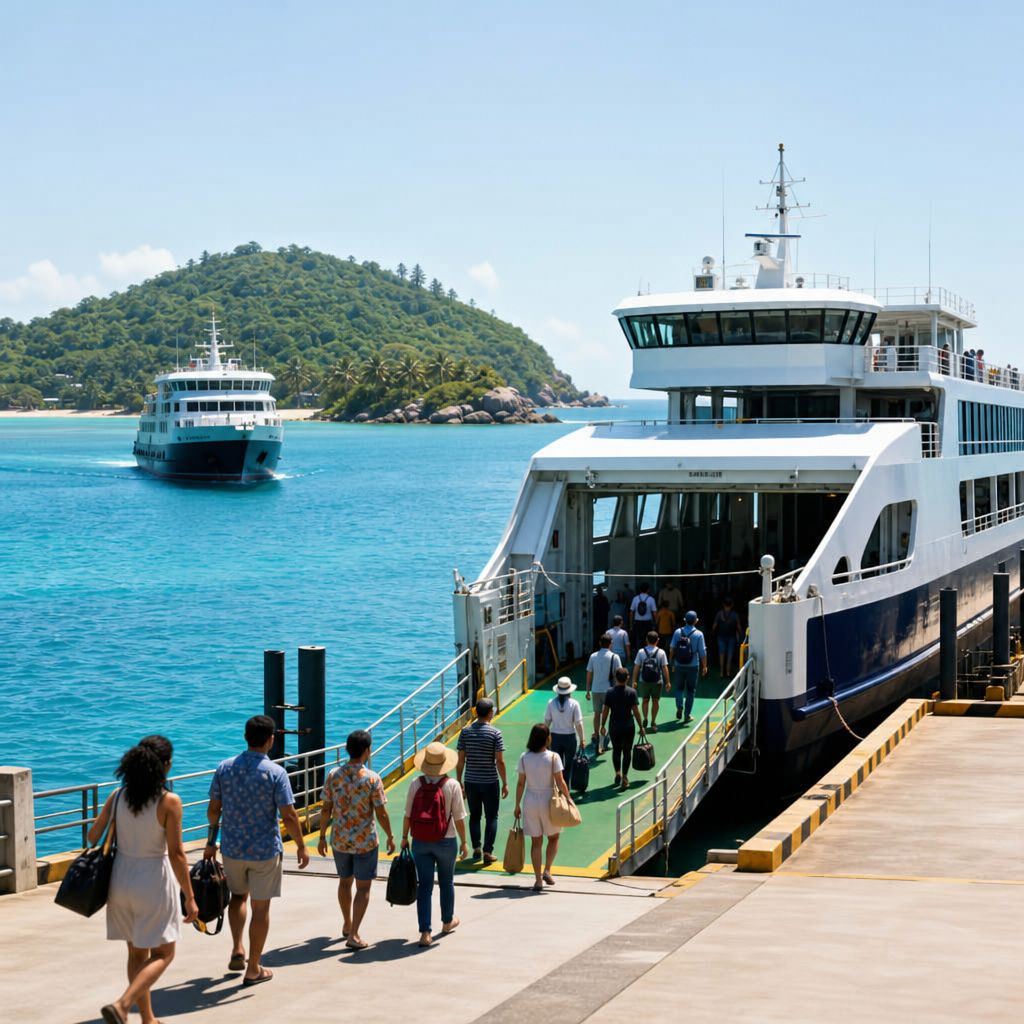
Coastal and Island Connectivity encompasses a broad range of transportation, communication, and logistical networks designed to overcome the unique challenges posed by maritime environments. These systems are essential for linking islands to mainland hubs, facilitating trade, tourism, and emergency response. The infrastructure typically includes ports, ferry services, shipping routes, and digital communication networks, all of which must be adapted to harsh weather conditions, tidal variations, and limited land availability.
The development of such connectivity requires careful planning to balance economic efficiency with environmental sustainability. For instance, ports must be designed to handle varying cargo volumes while minimizing ecological disruption to coastal ecosystems. Similarly, ferry services must operate reliably to ensure consistent access for residents and businesses, particularly in regions where air travel is prohibitively expensive or impractical. The integration of digital technologies, such as real-time tracking and automated scheduling, further enhances the efficiency and reliability of these systems.
In many cases, Coastal and Island Connectivity is not merely a matter of convenience but a lifeline for communities. Islands often rely on external supplies for food, medical resources, and energy, making robust transportation links indispensable. Conversely, coastal regions may depend on islands for tourism revenue, fishing grounds, or strategic military positioning. The interplay between these areas creates a symbiotic relationship that drives regional development and stability.
However, the implementation of such systems is fraught with challenges. Geographic isolation, limited infrastructure funding, and environmental vulnerabilities can hinder progress. For example, rising sea levels and increased storm frequency, driven by climate change, threaten the long-term viability of coastal and island infrastructure. Addressing these issues requires innovative engineering solutions, such as floating ports or resilient road networks, as well as international cooperation to share best practices and resources.
Technical Components
The technical foundation of Coastal and Island Connectivity involves multiple layers of infrastructure and technology. Ports serve as the primary nodes, equipped with cranes, storage facilities, and customs clearance zones to handle cargo efficiently. Modern ports often incorporate automated systems to streamline operations, reducing turnaround times for ships. For instance, container terminals may use gantry cranes capable of lifting up to 65 metric tons, ensuring rapid loading and unloading of goods (International Maritime Organization, 2020).
Ferry services are another critical component, particularly for passenger transport. These vessels range from small boats for short distances to large roll-on/roll-off (Ro-Ro) ferries capable of carrying hundreds of passengers and vehicles. Ro-Ro ferries are designed to minimize loading times, with ramps allowing vehicles to drive directly on and off the ship. This design is particularly useful for islands with limited port infrastructure, as it reduces the need for additional handling equipment.
Shipping routes must be carefully planned to optimize fuel efficiency and safety. Navigational challenges, such as shallow waters or strong currents, require precise mapping and real-time monitoring. Advanced technologies, such as Automatic Identification Systems (AIS), enable ships to track each other's positions, reducing the risk of collisions. Additionally, weather routing software helps vessels avoid storms, further enhancing safety and efficiency.
Digital connectivity is increasingly vital for Coastal and Island Connectivity. High-speed internet and mobile networks enable real-time communication between ports, shipping companies, and logistics providers. This connectivity supports the use of Internet of Things (IoT) devices, such as sensors that monitor cargo conditions (e.g., temperature for perishable goods) or track vessel performance. In remote areas, satellite communication may be the only viable option, ensuring that even the most isolated islands remain connected to global networks.
Historical Development
The evolution of Coastal and Island Connectivity reflects broader trends in transportation and technology. In ancient times, maritime trade routes connected civilizations across the Mediterranean, Indian Ocean, and South China Sea, facilitating the exchange of goods and ideas. Early ports, such as those in Phoenicia or the Roman Empire, were rudimentary by modern standards but laid the groundwork for future developments. These early systems relied on simple docks and manual labor, with ships often beached for loading and unloading.
The Industrial Revolution marked a turning point, as steamships and railroads revolutionized global trade. Steam-powered vessels reduced travel times and increased cargo capacity, making it feasible to connect distant islands and coastal regions. The construction of canals, such as the Suez and Panama Canals, further enhanced maritime connectivity by shortening shipping routes. By the late 19th century, telegraph cables had been laid across oceans, enabling near-instantaneous communication between continents.
The 20th century saw the rise of containerization, a innovation that dramatically improved the efficiency of cargo transport. Standardized containers, introduced in the 1950s, allowed goods to be seamlessly transferred between ships, trucks, and trains, reducing handling costs and transit times. This development spurred the growth of mega-ports, such as Rotterdam and Singapore, which became global hubs for trade. Concurrently, air travel emerged as a viable option for passenger transport, particularly for long-distance routes, though it remained cost-prohibitive for many island communities.
In recent decades, digitalization has transformed Coastal and Island Connectivity once again. The advent of GPS, satellite communication, and automated systems has improved the precision and reliability of maritime operations. Governments and private companies have also invested in sustainable infrastructure, such as electric ferries or solar-powered ports, to reduce environmental impact. These advancements reflect a growing recognition of the need to balance economic growth with ecological stewardship.
Application Area
- Trade and Logistics: Coastal and Island Connectivity is essential for global supply chains, enabling the movement of raw materials, manufactured goods, and agricultural products. Ports in island nations, such as Malta or Singapore, serve as critical transshipment hubs, redistributing cargo to smaller vessels for final delivery. Efficient connectivity reduces shipping costs and transit times, making island economies more competitive in global markets.
- Tourism: Many islands rely on tourism as a primary source of income, and robust transportation links are vital for attracting visitors. Ferry services and cruise ship ports provide access to scenic destinations, while airports connect islands to international markets. For example, the Greek Islands or the Caribbean depend heavily on seasonal tourism, requiring reliable connectivity to sustain local businesses.
- Emergency Response and Disaster Management: In the event of natural disasters, such as hurricanes or tsunamis, Coastal and Island Connectivity becomes a lifeline for affected communities. Rapid deployment of relief supplies, medical teams, and evacuation services depends on functional ports, airports, and communication networks. Islands are particularly vulnerable to such events, making resilient infrastructure a priority for governments and aid organizations.
- Energy and Resource Distribution: Islands often lack domestic energy resources, relying on imported fuel or renewable energy projects. Connectivity infrastructure, such as undersea cables or LNG (liquefied natural gas) terminals, enables the import and distribution of energy. For instance, Japan's remote islands depend on tankers to deliver fuel for power generation, highlighting the importance of reliable maritime transport.
- Military and Strategic Operations: Coastal and island regions play a crucial role in national defense, serving as bases for naval operations or surveillance. Connectivity ensures the rapid deployment of troops, equipment, and supplies, as well as the maintenance of communication networks. Strategic chokepoints, such as the Strait of Malacca or the South China Sea, underscore the geopolitical significance of maritime connectivity.
Well Known Examples
- Hong Kong-Zhuhai-Macau Bridge (China): This 55-kilometer bridge-tunnel system connects Hong Kong, Zhuhai, and Macau, reducing travel time between the regions from four hours to just 30 minutes. The project, completed in 2018, includes artificial islands and undersea tunnels to accommodate shipping lanes, demonstrating innovative engineering solutions for coastal connectivity.
- Greek Ferry Network: Greece's extensive ferry system links over 100 inhabited islands to the mainland, supporting tourism and local economies. Companies like Hellenic Seaways and Minoan Lines operate high-speed ferries and conventional vessels, with routes tailored to seasonal demand. The network is a model for island connectivity in the Mediterranean.
- Port of Rotterdam (Netherlands): As Europe's largest port, Rotterdam serves as a gateway for trade between the continent and the rest of the world. Its advanced infrastructure, including automated terminals and deep-water berths, handles over 460 million metric tons of cargo annually (Port of Rotterdam Authority, 2022). The port's connectivity extends to inland waterways, rail, and road networks, ensuring seamless distribution across Europe.
- Alaska Marine Highway System (USA): This ferry network connects remote coastal communities and islands in Alaska, providing essential transportation for residents and goods. The system operates year-round, navigating challenging Arctic conditions to deliver supplies, vehicles, and passengers. It is a critical lifeline for isolated villages that lack road access.
- Maldives' Hulhumalé Island: Hulhumalé is an artificial island near Malé, the capital of the Maldives, designed to alleviate overcrowding and enhance connectivity. The island features a modern port, residential areas, and infrastructure for tourism, demonstrating how land reclamation can address the challenges of island development in a densely populated archipelago.
Risks and Challenges
- Climate Change and Sea-Level Rise: Coastal and island infrastructure is highly vulnerable to rising sea levels, storm surges, and erosion. Ports, roads, and airports may require costly upgrades to remain operational, while low-lying islands face existential threats. For example, the Maldives, with an average elevation of just 1.5 meters above sea level, is at risk of submersion by the end of the century (IPCC, 2021).
- Environmental Degradation: The construction and operation of ports, shipping routes, and artificial islands can disrupt marine ecosystems, including coral reefs and mangrove forests. Dredging, pollution, and noise from vessels harm marine life and reduce biodiversity. Sustainable practices, such as eco-friendly port designs or green shipping initiatives, are essential to mitigate these impacts.
- High Infrastructure Costs: Developing and maintaining connectivity infrastructure in remote or harsh environments is expensive. Limited funding, particularly in small island developing states (SIDS), can delay projects or result in suboptimal solutions. Public-private partnerships (PPPs) are often used to share costs and expertise, but these arrangements require careful management to ensure equitable outcomes.
- Geopolitical Tensions: Maritime connectivity can become a flashpoint in territorial disputes, particularly in strategically important regions like the South China Sea. Competing claims over islands, shipping lanes, or resources may lead to conflicts that disrupt trade and transportation. International agreements, such as the United Nations Convention on the Law of the Sea (UNCLOS), provide a framework for resolving such disputes, but enforcement remains challenging.
- Technological Dependence and Cybersecurity: The increasing reliance on digital systems for navigation, communication, and logistics introduces new vulnerabilities. Cyberattacks on port operations or shipping companies can disrupt supply chains and compromise safety. For instance, the 2021 ransomware attack on the Colonial Pipeline in the USA highlighted the risks of digital dependence in critical infrastructure (Cybersecurity and Infrastructure Security Agency, 2021).
- Economic Volatility: Coastal and island economies are often dependent on a few key industries, such as tourism or fishing, making them vulnerable to economic shocks. The COVID-19 pandemic, for example, devastated island tourism, leading to job losses and reduced revenue for transportation services. Diversifying economies and building resilient infrastructure can help mitigate such risks.
Similar Terms
- Maritime Logistics: This term refers to the planning, implementation, and control of the movement of goods and people across oceans and seas. While closely related to Coastal and Island Connectivity, maritime logistics focuses more broadly on global shipping networks and supply chain management, rather than the specific challenges of coastal and island regions.
- Intermodal Transport: Intermodal transport involves the use of multiple modes of transportation (e.g., ship, rail, truck) to move goods from origin to destination. It is a key component of Coastal and Island Connectivity, particularly for linking ports to inland distribution networks. However, intermodal transport is not limited to maritime environments and can apply to any multimodal logistics system.
- Blue Economy: The blue economy encompasses all economic activities related to oceans, seas, and coastal areas, including fisheries, tourism, renewable energy, and maritime transport. Coastal and Island Connectivity is a subset of the blue economy, focusing specifically on the infrastructure and systems that enable movement and trade in these environments.
- Island Studies: This interdisciplinary field examines the social, economic, and environmental dynamics of islands and island communities. While it may address connectivity issues, island studies is broader in scope, encompassing topics such as culture, governance, and sustainability in island contexts.
Summary
Coastal and Island Connectivity is a multifaceted concept that underpins the economic, social, and strategic viability of coastal regions and islands worldwide. By integrating transportation, logistics, and digital infrastructure, it ensures that geographically fragmented areas remain accessible and resilient. The development of such systems requires addressing unique challenges, including climate change, environmental degradation, and high costs, while leveraging technological advancements to enhance efficiency and sustainability.
Historically, the evolution of Coastal and Island Connectivity has mirrored broader technological and economic trends, from ancient trade routes to modern digital networks. Today, it plays a critical role in global trade, tourism, emergency response, and national security. However, the risks posed by climate change, geopolitical tensions, and economic volatility demand innovative solutions and international cooperation to safeguard these vital systems for the future.
--