
Deutsch: China-Europa-Schienengüterverkehr / Español: Transporte ferroviario de mercancías China-Europa / Português: Transporte ferroviário de carga China-Europa / Français: Fret ferroviaire Chine-Europe / Italiano: Trasporto ferroviario merci Cina-Europa
The China-Europe Rail Freight represents a cornerstone of modern intercontinental logistics, bridging the vast geographical and economic landscapes of Asia and Europe. As a hybrid mode of transport, it combines the efficiency of rail networks with the strategic advantages of overland routes, offering a compelling alternative to maritime and air freight. This system has gained prominence in global supply chains, particularly in scenarios where speed, cost, and reliability are critical factors for businesses and governments alike.
General Description
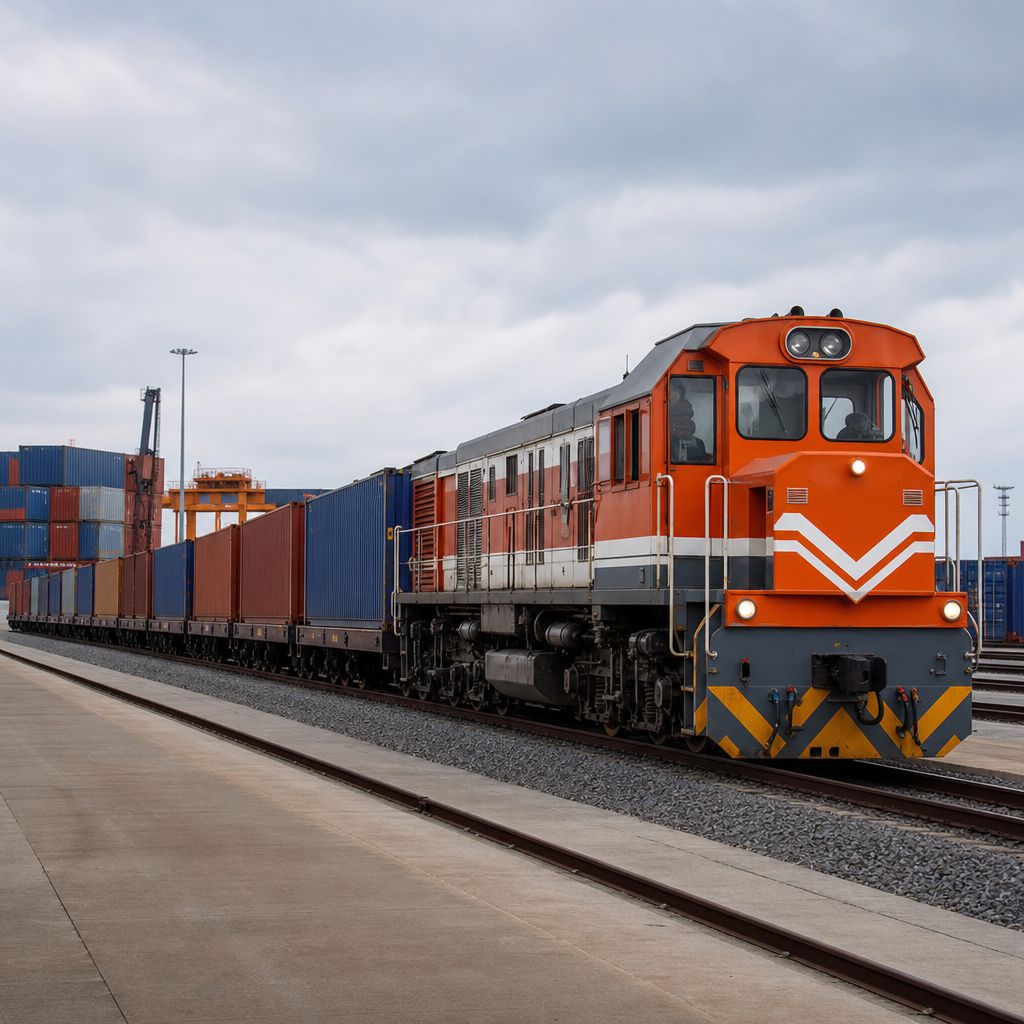
The China-Europe Rail Freight refers to a network of railway routes that connect industrial and commercial hubs in China with major cities and distribution centers across Europe. These routes traverse multiple countries, including Kazakhstan, Russia, Belarus, Poland, and Germany, among others, forming a transcontinental corridor that spans over 11,000 kilometers. The system is designed to facilitate the movement of goods such as electronics, automotive parts, machinery, textiles, and perishable items, leveraging standardized containers to ensure compatibility with other transport modes.
The development of this freight network was driven by the need to diversify supply chains and reduce dependency on traditional maritime routes, which, while cost-effective, often suffer from longer transit times and vulnerability to disruptions. Rail freight offers a middle ground, typically delivering goods in 12 to 18 days, compared to the 30 to 45 days required for sea transport. This time efficiency has made it an attractive option for industries requiring just-in-time delivery, such as manufacturing and retail.
The operational framework of China-Europe Rail Freight is underpinned by international cooperation, with governments and private enterprises collaborating to streamline customs procedures, harmonize regulations, and invest in infrastructure upgrades. Key initiatives, such as China's Belt and Road Initiative (BRI), have played a pivotal role in expanding and modernizing the rail network, fostering economic integration between participating countries. However, the system is not without its complexities, as it must navigate varying technical standards, geopolitical tensions, and logistical bottlenecks along the route.
From a technical perspective, the rail freight system relies on a mix of electrified and diesel-powered locomotives, depending on the region and infrastructure availability. The use of standardized ISO containers allows for seamless transfers between trains, trucks, and ships, enabling multimodal transport solutions. Additionally, advancements in tracking technologies, such as GPS and IoT-enabled sensors, have enhanced visibility and security throughout the transit process, allowing stakeholders to monitor shipments in real time and mitigate risks such as theft or damage.
Historical Development
The origins of China-Europe Rail Freight can be traced back to the early 2000s, when exploratory efforts were made to establish direct rail connections between the two continents. The first successful trial run occurred in 2008, when a train carrying electronics and machinery departed from Xiangtan in China and arrived in Hamburg, Germany, after a 17-day journey. This milestone demonstrated the feasibility of overland freight transport and laid the groundwork for further expansion.
The launch of the Belt and Road Initiative in 2013 marked a turning point for the network, as it provided the political and financial impetus to accelerate infrastructure development. Under the BRI, China invested heavily in upgrading rail lines, constructing new terminals, and improving border crossing facilities to reduce transit times and increase capacity. By 2016, the number of annual freight trains operating between China and Europe had surpassed 1,000, a figure that grew exponentially in subsequent years, reaching over 15,000 trains by 2021.
The COVID-19 pandemic further underscored the strategic importance of rail freight, as disruptions to maritime and air transport led to severe delays and shortages in global supply chains. During this period, the China-Europe Rail Freight network experienced a surge in demand, with businesses turning to rail as a reliable alternative for transporting medical supplies, electronics, and other critical goods. This shift highlighted the resilience of the rail network and its potential to play a more prominent role in future logistics strategies.
Technical and Operational Details
The China-Europe Rail Freight network operates on a gauge system that varies across regions, presenting one of the most significant technical challenges. While China and most of Europe use the standard gauge of 1,435 millimeters, countries such as Russia, Kazakhstan, and Mongolia employ the broader Russian gauge of 1,520 millimeters. This discrepancy necessitates the use of transshipment hubs, where containers are transferred between trains of different gauges, adding time and complexity to the process. Efforts to mitigate this issue include the development of gauge-changing technologies and the construction of dedicated terminals to streamline operations.
Another critical aspect of the network is its reliance on a mix of single and double-track lines, which affects capacity and efficiency. In regions with single-track infrastructure, trains must often wait for opposing traffic to clear, leading to delays. To address this, investments have been made to expand double-track sections, particularly in high-traffic corridors such as the Trans-Siberian Railway and the New Eurasian Land Bridge. These upgrades have increased throughput and reduced bottlenecks, enabling more frequent and predictable service.
Customs clearance is another area of focus, as the network traverses multiple jurisdictions with varying regulatory requirements. To expedite the process, participating countries have implemented measures such as pre-clearance procedures, digital documentation systems, and the establishment of "green corridors" that prioritize rail freight. These initiatives have significantly reduced dwell times at border crossings, improving overall efficiency. For example, the average customs clearance time at the China-Kazakhstan border has been reduced from several days to just a few hours in recent years.
Application Area
- Manufacturing and Automotive: The rail network is widely used by manufacturers to transport components and finished goods between production facilities in China and assembly plants in Europe. Automotive companies, in particular, rely on the system to deliver parts such as engines, transmissions, and electronics, ensuring just-in-time production schedules. For instance, German car manufacturers have increasingly turned to rail freight to source components from suppliers in China, reducing lead times and inventory costs.
- Retail and E-Commerce: Retailers and e-commerce platforms leverage the China-Europe Rail Freight to replenish stock and fulfill customer orders. The network's faster transit times compared to sea freight make it ideal for high-demand products such as electronics, fashion items, and consumer goods. Companies like Alibaba and Amazon have utilized the rail network to optimize their supply chains, particularly during peak shopping seasons.
- Energy and Raw Materials: The rail system is also employed to transport energy-related goods, including coal, oil products, and renewable energy components. For example, wind turbine parts manufactured in Europe are shipped to China for assembly, while Chinese-produced solar panels are transported to European markets. Additionally, the network facilitates the movement of critical minerals and metals, such as lithium and rare earth elements, which are essential for the production of batteries and electronics.
- Pharmaceuticals and Perishables: Temperature-controlled containers, known as reefer units, enable the transport of pharmaceuticals, fresh produce, and other perishable goods. The rail network's shorter transit times compared to maritime shipping reduce the risk of spoilage, making it a viable option for industries requiring strict temperature control. During the COVID-19 pandemic, the system played a crucial role in delivering vaccines and medical supplies between China and Europe.
Well Known Examples
- Chongqing-Duisburg Route: One of the most prominent routes in the China-Europe Rail Freight network connects Chongqing, a major industrial city in southwestern China, with Duisburg, Germany's largest inland port. This route, which spans approximately 11,000 kilometers, has become a key artery for the transport of electronics, automotive parts, and machinery. The success of this corridor has led to the establishment of logistics hubs in both cities, facilitating trade and economic cooperation between China and Europe.
- Yiwu-Madrid Line: Launched in 2014, the Yiwu-Madrid line is the longest rail freight route in the world, covering a distance of 13,000 kilometers. It connects Yiwu, a global wholesale market in eastern China, with Madrid, Spain, passing through Kazakhstan, Russia, Belarus, Poland, Germany, and France. This route has been instrumental in transporting consumer goods, textiles, and electronics, supporting the growth of trade between China and Southern Europe.
- Trans-Siberian Railway: While not exclusively dedicated to China-Europe freight, the Trans-Siberian Railway has played a vital role in the network's development. Stretching from Moscow to Vladivostok, this historic rail line serves as a critical link for trains traveling between China and Europe, particularly those bound for Russia and Eastern Europe. The railway's strategic importance has led to ongoing investments in its modernization, including the electrification of tracks and the expansion of capacity.
- China Railway Express (CR Express): Operated by China Railway, CR Express is the brand under which most China-Europe freight trains are marketed. It encompasses over 80 routes connecting more than 60 cities in China with over 200 cities in 24 European countries. CR Express has become synonymous with the China-Europe Rail Freight network, offering scheduled services, real-time tracking, and multimodal transport solutions to meet the diverse needs of shippers.
Risks and Challenges
- Geopolitical Tensions: The China-Europe Rail Freight network traverses multiple countries, some of which have complex political relationships. Tensions between nations, such as those between Russia and Western Europe, can lead to disruptions, including delays at border crossings, increased tariffs, or even the suspension of services. For example, the conflict in Ukraine has forced rerouting of some trains, adding time and cost to shipments.
- Infrastructure Limitations: Despite significant investments, the rail network still faces infrastructure constraints, particularly in regions with single-track lines or outdated signaling systems. These limitations can lead to congestion, delays, and reduced capacity, particularly during peak demand periods. Additionally, the need for gauge changes at transshipment hubs adds complexity and increases the risk of damage to goods.
- Regulatory and Customs Barriers: Each country along the route has its own customs procedures, documentation requirements, and regulatory standards, which can create bottlenecks and increase transit times. While efforts have been made to harmonize these processes, inconsistencies remain, particularly in areas such as safety regulations, environmental standards, and labor laws. Delays in customs clearance can result in additional costs for shippers and undermine the reliability of the rail network.
- Environmental Concerns: While rail freight is generally more environmentally friendly than road or air transport, it still contributes to carbon emissions, particularly in regions where diesel locomotives are used. The environmental impact of the network has come under scrutiny, with calls for greater investment in electrification and the use of renewable energy sources. Additionally, the construction of new rail lines and terminals can have ecological consequences, such as habitat disruption and increased noise pollution.
- Cost Fluctuations: The cost of shipping goods via the China-Europe Rail Freight network can vary significantly due to factors such as fuel prices, demand fluctuations, and geopolitical developments. While rail freight is often cheaper than air transport, it is typically more expensive than maritime shipping, which can limit its appeal for low-value or bulk goods. Shippers must carefully evaluate the cost-benefit ratio of rail freight, particularly in light of volatile market conditions.
- Security Risks: The long distances and multiple handovers involved in China-Europe Rail Freight create opportunities for theft, smuggling, and other security breaches. While tracking technologies have improved visibility, the risk of cargo theft remains a concern, particularly in regions with weaker law enforcement. Additionally, the transport of hazardous materials, such as chemicals or lithium batteries, requires stringent safety measures to prevent accidents or environmental damage.
Similar Terms
- New Eurasian Land Bridge: This term refers to the overland rail and road corridors connecting China with Europe via Central Asia and Russia. It encompasses the China-Europe Rail Freight network but also includes other transport modes and routes, such as the Trans-Caspian International Transport Route, which bypasses Russia by traversing the Caucasus and Turkey.
- Intermodal Transport: Intermodal transport involves the use of multiple modes of transportation, such as rail, road, and sea, to move goods in a single container. The China-Europe Rail Freight is a form of intermodal transport, as it often integrates rail with trucking or maritime shipping to provide door-to-door delivery solutions.
- Trans-Siberian Railway: The Trans-Siberian Railway is a historic rail line that stretches from Moscow to Vladivostok, serving as a key component of the China-Europe Rail Freight network. While it is primarily used for domestic and regional transport, it also facilitates international freight movements between Asia and Europe.
- Belt and Road Initiative (BRI): The BRI is a global infrastructure development strategy launched by China in 2013 to enhance connectivity and economic cooperation between Asia, Europe, Africa, and beyond. The China-Europe Rail Freight network is a central component of the BRI, reflecting its goal of creating efficient overland transport corridors.
Summary
The China-Europe Rail Freight network has emerged as a vital link in global logistics, offering a faster and more flexible alternative to traditional maritime and air transport. By connecting key industrial and commercial hubs across two continents, it has facilitated trade, supported supply chain resilience, and driven economic integration. However, the network faces significant challenges, including geopolitical tensions, infrastructure limitations, and regulatory barriers, which must be addressed to ensure its long-term viability.
As the demand for efficient and sustainable transport solutions continues to grow, the China-Europe Rail Freight is poised to play an increasingly important role in global trade. Its success will depend on continued investment in infrastructure, technological innovation, and international cooperation, as well as the ability to adapt to evolving market conditions and geopolitical dynamics. For businesses and governments alike, the network represents both an opportunity and a challenge, requiring careful planning and strategic decision-making to maximize its potential.
--